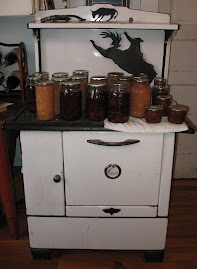
Floyd Peterson’s staggering collection of junk, mostly metal scrap, was stored in and around an enormous well-weathered building next to the old Mill Pond in Enterprise. Somehow Mike figured that amongst all that junk Floyd might have a cookstove, which Floyd did, which is how for the grand sum of $25 we became proud owners of the Plymouth.
“It’s all there,” Floyd said, pointing to a pile of metal that he claimed was a functional wood stove. “We raised six kids on it and it’s been right there ever since I took it out of the house.” Mike brought the pieces home and indeed, it was all more or less there, from the somewhat-repaired firebox, to the black-trimmed white porcelain warming shelf, to the oven temperature indicator reading: “warm–slow-medium-hot-very hot.”
For twenty-five years, the Plymouth served us well. It was about as non-airtight as it gets and wouldn’t hold a fire for more than an hour (well, maybe longer if you put some apple wood in it). At baking temperature, the inside of the oven would be 500 degrees in the left rear corner and 300 degrees in the right front. If you forgot and set something breakable on the warming tray, it would soon vibrate toward the edge as people walked past and then fall off and shatter on the cast iron stove top.
In short, the Plymouth was a beloved fixture in our otherwise frigid farmhouse. The center of every winter morning, and every holiday gathering, loaded with simmering and baking foods, a place to dry out and warm up after cold, tiring work, the Plymouth was like an alter in the middle of our lives.
Several firebox repairs and about 150 chords of wood later, we’re not exactly getting rid of the Plymouth, we’re just putting her into semi-retirement. We’re modernizing. For our thirtieth wedding anniversary Mike gave me a brand-new modern, efficient, wood cookstove. As of this very moment, all six hundred pounds of the Oval are resting on the new tile hearth Mike built, hooked up to the new insulated chimney that Mike put in, burning a toasty fire of wood that Mike and Zeke harvested. She’s a beaut.
The old Plymouth hasn’t quite made it out of the kitchen yet, but will likely head to the canyon to take up a service in the ranch bunkhouse. She’ll need a new firebox first. And the bunkhouse needs new sills, a chimney, a door…it could be a few years. But that’s okay. If there’s one thing I’ve learned, it’s that a useable cookstove is worth hanging onto.
From Magpie Ranch, home of Bunchgrass Beef
Wednesday, November 18, 2009
Monday, November 9, 2009
Hairy Lucy
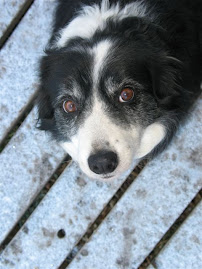
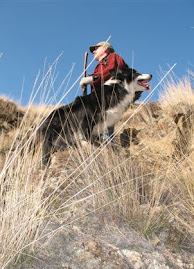
She didn't start out that way. When Prairie and I took pick of the litter, Lucita La Luz was a silky sweet pup with prick ears. We chose her for her confirmation and personality, which we hoped mirrored her grandmother, Bonnie, one of our favorite dogs.
Lucy joined the pack, at that time consisting of Oso, Bonnie and Chili, and assumed her role of relentlessly harassing the older dogs. Since she was too young to work, she did her best to herd the other canines at the ranch, racing ahead to cut them off and nipping at their legs, necks and shoulders. She was a colossal pest. But since all the other dogs had exhibited this same behavior as pups, they tolerated her or sent her packing with a no-nonsense growl.
When Lucy was about a year old, she and I were walking the fields behind the farmhouse when a coyote popped up from the marsh and loped off across the stubble. Lucy spotted him and took off like a rocket. I let her go, thinking this would be a good time to work on a call back, to get her to break her focus and listen to me. The coyote was a long ways off and I knew there was little chance of her ever getting close to it.
Her speed was unbelievable. I was so impressed that I just let her run. As I watched her churn across the field in a cloud of dust, it reminded me of the old roadrunner cartoons. She was humming.
I came to my senses and called her back, whistling long and sharp into the morning. When she heard me, she turned and ran all the way back to where I waited at the pond. She galloped up, tongue lolling, flashing a smile as if to say, "Now that was fun."
Lucy taught me an important lesson about communication. She was a pup when Zeke was in grade school and he loved to call her into his lap, where she would jump all over him and lick his face. As she grew older, this behavior transformed into a tightly coiled, forty-pound leap launched at your face as you walked across the yard. I hated it. Visitors like it even less.
I tried everything to break this habit, but nothing worked. Finally after two years, it clicked. She was not misbehaving, she was obeying a command. Zeke had trained her to "give kisses" and the command for this action was to look down at her and make eye contact. As soon as I figured this out, I stopped giving the command. When she bounced over to me in the morning, I looked straight ahead, said, "Sit" and held my hand out flat at my side.
At first she would sit obediently, but when I then tipped my head to look at her, she would jump, bam, teeth-first into my face. So I tried looking straight ahead and then petting her without looking down. It worked. I asked others to do the same and after a year she stopped jumping up altogether. It's amazing what we teach each other without meaning to.
Lucy was about four when she went to graduate school. She and Mike headed to the US Sheep Experiment Station in Dubois, Idaho where they grazed sheep on knapweed and developed protocols for controlling invasive species using livestock. Lucy was our first dog who could work both sheep and cattle.
Back in Wallowa County, she worked hard and eventually retired at age ten. The older she got the hairier she got. Her undercoat grew more and more dense and she never seemed to shed out all the way. Combing and brushing helped, but she was still a magnet for burrs and seeds. After two expensive trips to the vet to remove foxtail embedded in her abdomen, I took to shaving her each spring. When several friends appeared on the scene with dogs that were also named "Lucy", she became first Big Lucy and then Hairy Lucy.
In her last chapter of life, Lucy was the grandkid dog, the sweet old beast that would stand while one-year-old Dawson patted her back and grabbed handfuls of her ruff. As long as she got a chance to snake a tongue in his face every now and then, she was happy to put up with him.
Saturday Lucy went to meet her maker. Zeke and I dug the hole and the younger dogs, Newt and Ruby, came over to give her one last sniff. I laid my hand on her back, "Lucy, you were a good dog," I said. "Ashes to ashes and dust to dust," said Zeke.
If anybody comes over to pay their respects, you can find Lucy's final resting place out back in the dog cemetery next to the native grass nursery. Her's is the one with the deep red basalt stone.
From the Magpie Ranch, home of Bunchgrass Beef
Lucy joined the pack, at that time consisting of Oso, Bonnie and Chili, and assumed her role of relentlessly harassing the older dogs. Since she was too young to work, she did her best to herd the other canines at the ranch, racing ahead to cut them off and nipping at their legs, necks and shoulders. She was a colossal pest. But since all the other dogs had exhibited this same behavior as pups, they tolerated her or sent her packing with a no-nonsense growl.
When Lucy was about a year old, she and I were walking the fields behind the farmhouse when a coyote popped up from the marsh and loped off across the stubble. Lucy spotted him and took off like a rocket. I let her go, thinking this would be a good time to work on a call back, to get her to break her focus and listen to me. The coyote was a long ways off and I knew there was little chance of her ever getting close to it.
Her speed was unbelievable. I was so impressed that I just let her run. As I watched her churn across the field in a cloud of dust, it reminded me of the old roadrunner cartoons. She was humming.
I came to my senses and called her back, whistling long and sharp into the morning. When she heard me, she turned and ran all the way back to where I waited at the pond. She galloped up, tongue lolling, flashing a smile as if to say, "Now that was fun."
Lucy taught me an important lesson about communication. She was a pup when Zeke was in grade school and he loved to call her into his lap, where she would jump all over him and lick his face. As she grew older, this behavior transformed into a tightly coiled, forty-pound leap launched at your face as you walked across the yard. I hated it. Visitors like it even less.
I tried everything to break this habit, but nothing worked. Finally after two years, it clicked. She was not misbehaving, she was obeying a command. Zeke had trained her to "give kisses" and the command for this action was to look down at her and make eye contact. As soon as I figured this out, I stopped giving the command. When she bounced over to me in the morning, I looked straight ahead, said, "Sit" and held my hand out flat at my side.
At first she would sit obediently, but when I then tipped my head to look at her, she would jump, bam, teeth-first into my face. So I tried looking straight ahead and then petting her without looking down. It worked. I asked others to do the same and after a year she stopped jumping up altogether. It's amazing what we teach each other without meaning to.
Lucy was about four when she went to graduate school. She and Mike headed to the US Sheep Experiment Station in Dubois, Idaho where they grazed sheep on knapweed and developed protocols for controlling invasive species using livestock. Lucy was our first dog who could work both sheep and cattle.
Back in Wallowa County, she worked hard and eventually retired at age ten. The older she got the hairier she got. Her undercoat grew more and more dense and she never seemed to shed out all the way. Combing and brushing helped, but she was still a magnet for burrs and seeds. After two expensive trips to the vet to remove foxtail embedded in her abdomen, I took to shaving her each spring. When several friends appeared on the scene with dogs that were also named "Lucy", she became first Big Lucy and then Hairy Lucy.
In her last chapter of life, Lucy was the grandkid dog, the sweet old beast that would stand while one-year-old Dawson patted her back and grabbed handfuls of her ruff. As long as she got a chance to snake a tongue in his face every now and then, she was happy to put up with him.
Saturday Lucy went to meet her maker. Zeke and I dug the hole and the younger dogs, Newt and Ruby, came over to give her one last sniff. I laid my hand on her back, "Lucy, you were a good dog," I said. "Ashes to ashes and dust to dust," said Zeke.
If anybody comes over to pay their respects, you can find Lucy's final resting place out back in the dog cemetery next to the native grass nursery. Her's is the one with the deep red basalt stone.
From the Magpie Ranch, home of Bunchgrass Beef

Saturday, October 17, 2009
Heads and Hides
They are beautiful, these animals we have chosen to raise and live with and to respectfully harvest and appreciate as a source of food.
The harvest went well. Now the Bunchgrass Beef from Magpie Ranch is carefully aging, soon to be skillfully cut and packaged for each family who is waiting, freezer at the ready, to receive this year's bounty. I am thankful.
I am also thankful for all the work that Mike has put into preparing the heads and hides of these amazing animals. He skins and cleans each head and puts it away to dry. In a year or so, each stark skull with its impressive horns, will be ready for sale to provide another source of income to sustain the ranch.
There is something about taxidermy that creeps me out, but I don't feel that way about skulls. Perhaps this is because out on the prairie and in the canyons, bones are part of the landscape. Sun-bleached and porous, each holds testament to an individual life. The skulls of deer, cattle, and elk are more common, but an unusual skull is something to ponder. I cradle it in my hands, How tiny the skull of a mouse! How interesting the teeth of a badger!
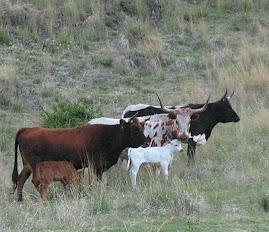
Each skull from the Bunchgrass Beef herd is unique. Some have long swooping white horns delicately tipped in black. Some have powerful short horns that arc inward. Some have horns that jut forward, like tines on a pitchfork. I admire them all.
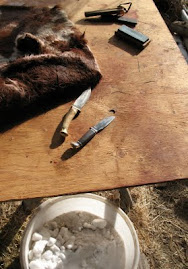
For the hides, Mike painstakingly cleans the flesh side and generously rubs fine salt into each hide. Then the hides are folded and put away to dry. After cleaning and salting, they can be safely stored until we are ready to have them tanned, either as regular leather, or with the hair on for rugs or upholstery. Each one is unique and a pleasure to look at.
I'm glad that today, when I look at a skull or a hide from an animal out of the Bunchgrass Beef herd, I can feel a sense of peace. I am thankful that each animal had a life well lived as part of the herd in a wild and beautiful place.
From Magpie Ranch, home of Bunchgrass Beef
The harvest went well. Now the Bunchgrass Beef from Magpie Ranch is carefully aging, soon to be skillfully cut and packaged for each family who is waiting, freezer at the ready, to receive this year's bounty. I am thankful.
I am also thankful for all the work that Mike has put into preparing the heads and hides of these amazing animals. He skins and cleans each head and puts it away to dry. In a year or so, each stark skull with its impressive horns, will be ready for sale to provide another source of income to sustain the ranch.
There is something about taxidermy that creeps me out, but I don't feel that way about skulls. Perhaps this is because out on the prairie and in the canyons, bones are part of the landscape. Sun-bleached and porous, each holds testament to an individual life. The skulls of deer, cattle, and elk are more common, but an unusual skull is something to ponder. I cradle it in my hands, How tiny the skull of a mouse! How interesting the teeth of a badger!
Each skull from the Bunchgrass Beef herd is unique. Some have long swooping white horns delicately tipped in black. Some have powerful short horns that arc inward. Some have horns that jut forward, like tines on a pitchfork. I admire them all.
For the hides, Mike painstakingly cleans the flesh side and generously rubs fine salt into each hide. Then the hides are folded and put away to dry. After cleaning and salting, they can be safely stored until we are ready to have them tanned, either as regular leather, or with the hair on for rugs or upholstery. Each one is unique and a pleasure to look at.
I'm glad that today, when I look at a skull or a hide from an animal out of the Bunchgrass Beef herd, I can feel a sense of peace. I am thankful that each animal had a life well lived as part of the herd in a wild and beautiful place.
From Magpie Ranch, home of Bunchgrass Beef
Tuesday, October 6, 2009
The Third of October
Snow. Closing in like a flour sack being cinched around our valley.Where were the mountains? Where was the neighbor’s house at the far side of the field? I could barely see the barn through the frigid wet clouds that had settled onto us like a hen on top of her nest.
We were building corrals as the snow fell ceaselessly, heaping up on surfaces like some kind of water-saturated frosting. Jarred loose by our hammer blows it splatted in little glops on our hats, shoulders, hands.
As we pounded and sawed and measured, wrapped in our slickers and wearing our winter boots, we kept saying, “Wasn’t it ninety-one degrees a week ago? We were out in the yard in shorts and t-shirts, barbecuing up Bunchgrass Beef burgers!”
I escaped the wet and the hammering and headed to the kitchen to start lunch: a huge pot of minestrone soup, batches of yeasted rolls and apple pies. Zeke and three friends from Portland, a couple more friends from Enterprise, and Bryan and Tanyia were here helping and before long, the wet and hungry hordes would need a warm and tasty refuge.
There is nothing quite like coming into a savory kitchen, dumping your sodden muddy layers in the porch, and being enveloped in the smell of soup simmering, bread baking, and bubbly cinnamon-apple pies resting on the sideboard. A hot beverage is pressed into your hand, and you wedge into the circle at the table, elbow to elbow, stories and laughter swirling around you as your weary muscles relax and good food fills your belly.
Saturday showed me more of the ‘neighborly economy’ that goes into the raising of Bunchgrass Beef. The untimely snow may have dampened our labors, but the spirit of camaraderie kept us going. Night began to fall and with it snow-laden trees that collapsed onto power lines taking out the power at farmsteads all along Prairie Creek. We lit lanterns and candles and pulled out extra blankets, grateful for the warmth of friendship and the old upright piano, as the timeless music of familiar hymns filled the living room.
From Magpie Ranch, home of Bunchgrass Beef
We were building corrals as the snow fell ceaselessly, heaping up on surfaces like some kind of water-saturated frosting. Jarred loose by our hammer blows it splatted in little glops on our hats, shoulders, hands.
As we pounded and sawed and measured, wrapped in our slickers and wearing our winter boots, we kept saying, “Wasn’t it ninety-one degrees a week ago? We were out in the yard in shorts and t-shirts, barbecuing up Bunchgrass Beef burgers!”
I escaped the wet and the hammering and headed to the kitchen to start lunch: a huge pot of minestrone soup, batches of yeasted rolls and apple pies. Zeke and three friends from Portland, a couple more friends from Enterprise, and Bryan and Tanyia were here helping and before long, the wet and hungry hordes would need a warm and tasty refuge.
There is nothing quite like coming into a savory kitchen, dumping your sodden muddy layers in the porch, and being enveloped in the smell of soup simmering, bread baking, and bubbly cinnamon-apple pies resting on the sideboard. A hot beverage is pressed into your hand, and you wedge into the circle at the table, elbow to elbow, stories and laughter swirling around you as your weary muscles relax and good food fills your belly.
Saturday showed me more of the ‘neighborly economy’ that goes into the raising of Bunchgrass Beef. The untimely snow may have dampened our labors, but the spirit of camaraderie kept us going. Night began to fall and with it snow-laden trees that collapsed onto power lines taking out the power at farmsteads all along Prairie Creek. We lit lanterns and candles and pulled out extra blankets, grateful for the warmth of friendship and the old upright piano, as the timeless music of familiar hymns filled the living room.
From Magpie Ranch, home of Bunchgrass Beef
Sunday, September 27, 2009
Sometimes Things Can Go Very Right
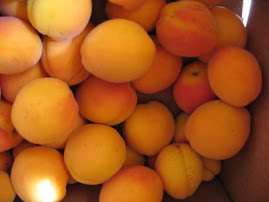
I love it when the peaches resting in their boxes on the kitchen floor reach perfect ripeness on the evening I have time to can. Or when the dogs lie down in the exact spot that keeps two renegade pairs from quitting the Bunchgrass Beef herd. Or maybe when the number of cucumbers from one picking just equal the amount needed for the pickle recipe. Or when the lead cow looks at the open gate, looks at me on my horse, feels the herd milling behind her and decides to walk into the corral.
That’s what happened on Saturday when I was riding Mestizo, and it felt especially good. A lot of animal experts, Temple Grandin, Tom Dorrance, etc. tell us how as predators, we can interact with prey animals without either them or us freaking out. In theory, it seems clear. In practice, I often fall short of my intent.
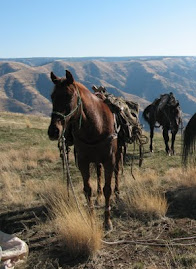
Mestizo is our tall red horse, who, after ten years of thinking he was a pack animal, is learning that he will be carrying me around on his back the rest of his life. The Peruvian Paso of his mother gives him a long smooth gait and the thoroughbred of his father makes him high-headed and nervous. Mestizo does an excellent job in the comfort of the pack string and he enjoyed his place on the ranch until we ran short on horses this year.
I needed to ride him again, but I wasn’t looking forward to it. When we were given Mestizo as a colt he was already terrified of a few things, like being tied up and sprayed with liquid. His flight instinct had kicked in, but he couldn’t run away so he had learned to rear violently in response to stress. A bucking horse can make me nervous, but a rearing horse unleashes a flood of icy fear in my brain. Adrenalin explodes throughout my body and I’m incapable of sensibly communicating with the animal between my legs. Combine Mestizo’s fear with mine and it’s not a pretty picture.
This June when Bryan decided to ride Mestizo on the cattle drive to the summer range, I watched how Bryan pushed Mestizo through his anxiety with forward motion, instead of working against it. Mestizo danced around and turned a lot of circles, but he didn’t rear. This time when we gathered the herd I was ready to try again.
Yes, Mestizo humped up a few times as we rode through the dark grove of wind-whipped Ponderosa pines. Yes, he whinnied and danced when Mike and Zip got too far away from us on the other side of the herd. But when we reached the corrals, there was no more worrying about us. The cattle were either going in the corral or we were going to be chasing them all over the prairie.
I stopped thinking and let my body guide the movement I knew would help the cattle decide that entering the corral was easier than running away from it. Mestizo flowed beneath me, yielding to pressure, turning, striding, turning, scooting in front of the red cow, then back to head off the brindle. The first cow finally chose the open gate and the rest of the herd followed. A stiff breeze chased the dust north into the timber. Mestizo blew softly as my hand reached under his mane to scratch his supple neck. We had done a good job. Together.
From the Magpie Ranch, home of Bunchgrass Beef
That’s what happened on Saturday when I was riding Mestizo, and it felt especially good. A lot of animal experts, Temple Grandin, Tom Dorrance, etc. tell us how as predators, we can interact with prey animals without either them or us freaking out. In theory, it seems clear. In practice, I often fall short of my intent.
Mestizo is our tall red horse, who, after ten years of thinking he was a pack animal, is learning that he will be carrying me around on his back the rest of his life. The Peruvian Paso of his mother gives him a long smooth gait and the thoroughbred of his father makes him high-headed and nervous. Mestizo does an excellent job in the comfort of the pack string and he enjoyed his place on the ranch until we ran short on horses this year.
I needed to ride him again, but I wasn’t looking forward to it. When we were given Mestizo as a colt he was already terrified of a few things, like being tied up and sprayed with liquid. His flight instinct had kicked in, but he couldn’t run away so he had learned to rear violently in response to stress. A bucking horse can make me nervous, but a rearing horse unleashes a flood of icy fear in my brain. Adrenalin explodes throughout my body and I’m incapable of sensibly communicating with the animal between my legs. Combine Mestizo’s fear with mine and it’s not a pretty picture.
This June when Bryan decided to ride Mestizo on the cattle drive to the summer range, I watched how Bryan pushed Mestizo through his anxiety with forward motion, instead of working against it. Mestizo danced around and turned a lot of circles, but he didn’t rear. This time when we gathered the herd I was ready to try again.
Yes, Mestizo humped up a few times as we rode through the dark grove of wind-whipped Ponderosa pines. Yes, he whinnied and danced when Mike and Zip got too far away from us on the other side of the herd. But when we reached the corrals, there was no more worrying about us. The cattle were either going in the corral or we were going to be chasing them all over the prairie.
I stopped thinking and let my body guide the movement I knew would help the cattle decide that entering the corral was easier than running away from it. Mestizo flowed beneath me, yielding to pressure, turning, striding, turning, scooting in front of the red cow, then back to head off the brindle. The first cow finally chose the open gate and the rest of the herd followed. A stiff breeze chased the dust north into the timber. Mestizo blew softly as my hand reached under his mane to scratch his supple neck. We had done a good job. Together.
From the Magpie Ranch, home of Bunchgrass Beef
Saturday, September 12, 2009
Neighborly Economy
The night frosts are upon us, down to 25 degrees on Monday, and we’re in the thick of the harvest. I picked pears and apples this week and today I lugged a bucket of cucumbers in from the garden for a batch of honey-curry pickles. It’s also the season for meat and the first hunters are out in the hills. In a few weeks, we’ll be butchering and starting our delicious Bunchgrass Beef on its way to hungry families anxious to lay in a supply for the coming winter. Think of all those kitchens that will soon be filled with the tantalizing aroma of simmering stews and savory roasts. I’m starting to salivate.
One of the best parts of having a family ranch is having family. Our “real” family, and our amazing “family” of friends who work for each other, lend each other stuff and barter to get things done. This week Prairie was here helping sort and move cattle and build fence.
Prairie also stretches our thinking with discussions about local food systems, sustainable communities and economic justice. We’re lucky to have her out in the world learning, traveling and working towards positive change. One thing she shared with us was a list of Wendell Berry’s 17 rules for a sustainable community that appeared in YES! magazine. Berry is a farmer and well-known author and many of his rules resonated with me. I especially liked rule #15:
“Always be aware of the economic value of neighborly acts. In our time the costs of living are greatly increased by the loss of neighborhood, leaving people to face their calamities alone.”
When asked what they value about living in small rural communities, I often hear people say it is that we help each other when we need it. A house burns down, someone is injured in an accident or becomes ill, and suddenly a whole swarm of people tumble out to organize meals, set up donation accounts, raffle quilts, hold dances and auction off $150 huckleberry pies.
Our family certainly relies on and enjoys being part of the neighborly economy. Just this week we had Prairie’s help with the cattle, Bryan was here to lay out the new corral, Pam called to offer green beans and another friend let us glean fruit from his orchard. We then passed on apples and cucumbers to other families.
While she was here, Prairie also took over the kitchen and whipped up some tasty meals. Working at Zenger Community Farm and immersed in the thriving food scene of Portland, she collects a lot of interesting recipes. The Carne Asada tacos she made were perfect for Gabe’s birthday dinner. Try out her simple and savory recipe. With a few neighborly acts, you might even be able to rustle up some of the ingredients right where you live. In any case, you can start "economizing" by having the neighbors over to enjoy it. Maybe they'll bring the beans and rice.
Prairie’s Carne Asada Tacos
A nice piece of grassfed beef - sirloin, flank, or round steak
Juice of 2 limes mixed with several cloves of minced garlic, some olive oil, salt and pepper
Marinate the meat in the refrigerator for 4-8 hours in the lime juice/garlic/olive oil. Then cook the meat. You can cut it up into small pieces and sauté it. Or you can grill or broil it whole and then cut it up. Don't overcook it.
Serve on warm corn tortillas garnished with:
Chopped white onion in fresh lime juice with fresh cilantro
Fresh jalapenos minced
Hot pickled veggies, jalapenos, carrots, cauliflower, etc.
Fresh or home canned salsa
Shredded cabbage
Chunked avocado
Goes good with a side of rice and beans.
From Magpie Ranch, home of Bunchgrass Beef
One of the best parts of having a family ranch is having family. Our “real” family, and our amazing “family” of friends who work for each other, lend each other stuff and barter to get things done. This week Prairie was here helping sort and move cattle and build fence.
Prairie also stretches our thinking with discussions about local food systems, sustainable communities and economic justice. We’re lucky to have her out in the world learning, traveling and working towards positive change. One thing she shared with us was a list of Wendell Berry’s 17 rules for a sustainable community that appeared in YES! magazine. Berry is a farmer and well-known author and many of his rules resonated with me. I especially liked rule #15:
“Always be aware of the economic value of neighborly acts. In our time the costs of living are greatly increased by the loss of neighborhood, leaving people to face their calamities alone.”
When asked what they value about living in small rural communities, I often hear people say it is that we help each other when we need it. A house burns down, someone is injured in an accident or becomes ill, and suddenly a whole swarm of people tumble out to organize meals, set up donation accounts, raffle quilts, hold dances and auction off $150 huckleberry pies.
Our family certainly relies on and enjoys being part of the neighborly economy. Just this week we had Prairie’s help with the cattle, Bryan was here to lay out the new corral, Pam called to offer green beans and another friend let us glean fruit from his orchard. We then passed on apples and cucumbers to other families.
While she was here, Prairie also took over the kitchen and whipped up some tasty meals. Working at Zenger Community Farm and immersed in the thriving food scene of Portland, she collects a lot of interesting recipes. The Carne Asada tacos she made were perfect for Gabe’s birthday dinner. Try out her simple and savory recipe. With a few neighborly acts, you might even be able to rustle up some of the ingredients right where you live. In any case, you can start "economizing" by having the neighbors over to enjoy it. Maybe they'll bring the beans and rice.
Prairie’s Carne Asada Tacos
A nice piece of grassfed beef - sirloin, flank, or round steak
Juice of 2 limes mixed with several cloves of minced garlic, some olive oil, salt and pepper
Marinate the meat in the refrigerator for 4-8 hours in the lime juice/garlic/olive oil. Then cook the meat. You can cut it up into small pieces and sauté it. Or you can grill or broil it whole and then cut it up. Don't overcook it.
Serve on warm corn tortillas garnished with:
Chopped white onion in fresh lime juice with fresh cilantro
Fresh jalapenos minced
Hot pickled veggies, jalapenos, carrots, cauliflower, etc.
Fresh or home canned salsa
Shredded cabbage
Chunked avocado
Goes good with a side of rice and beans.
From Magpie Ranch, home of Bunchgrass Beef
Sunday, August 30, 2009
Owls
On the cusp of autumn, the owls are back in the cottonwoods. All week long I wake again and again to hear them. Calling. Calling. Their softly feathered voices like sonorous drums carrying a message along the watercourses of the valley.
I don’t know what brings these great horned owls from their usual haunts to our tall cottonwoods each year. During the summer, we see them perched on power poles or swooping out of the tops of willows and gliding off into the dusk. But late winter and early fall they join us for a week or so, settling in outside our sleeping household and gently waking us in the dark hours. I am impressed by their persistence, their meditative calls that go on and on. I wonder what they are thinking.
Owls are one of my totems. As a child, I grew up on salt water in the land of coastal tribes. Dark fathomed arms of the Pacific reaching into the continent to lap fir-covered humps of land. Even in this dry country where I now live, I feel a tiny totem pole shaped inside me. Significant, recurring experiences,indelible over time. What I carry with me.
At our first home in the canyon, I was often with owls. At the edge of a vast grassland bench, Tulley Creek nestles into the draw with red rock rims stair-stepping to the breaks above. It’s a special place. But I was struggling with the isolation of a woman in a man’s world, and hardly any men at that. It was like being on a tether, trapped in the snare of two babies under the age of two. Diapers piling up, everything washed on a board.
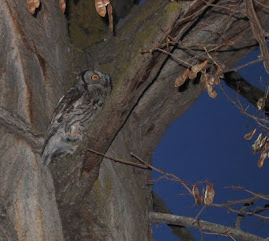
One long evening in August, I stood in the screened porch looking east when a tiny screech owl landed on the gatepost at the end of the boardwalk. Another owl landed on the other post. They perched quietly, their heads swiveled backwards. I had never been so close to an owl.
I stepped inside and picked up the crawling baby, took the other child by the hand. “Look at the owls,” I whispered, kneeling in the porch doorway. Dusk was falling and the orange tabby kittens began tumbling out of their lair in a mass of daylilies crowding the porch. Suddenly I knew why the owls were there.
I had already lost most of my cats and in the constant battle with mice and packrats I couldn’t afford to be without. My last mother cat had been hauled off by something that left her dead and hanging high up in an alder tree behind the cabin. These kittens were all I had left. “Get,” I said, waving a hand at the owls. They ignored me, eyes riveted to the squirming kittens wrestling in the trampled yard. I picked up a rock. It smacked against the post. I picked up another rock and threw it hard. The owls lifted and flapped away.
The next afternoon I had to get out. I saddled a horse, threw some panniers over the saddle, put the baby on my back. I lifted the toddler onto the horse and walked to the old orchard about a mile down the bench. I picked too many apples and let time get away from me. Dark was gathering. The mare was spooked. She didn’t like the bags of apples shifting against her side or the toddler perched on top of the load. Coming off the hill onto the trail, she snorted and whirled, the toddler cried. I jerked the lead, apples spilled.
I barely got a hold of the toddler and dragged him to the ground by one arm before he got dumped. The mare pranced and snorted like there were cougars in the brush. The toddler refused to get back on, so I trudged toward home, lugging him in one arm, the baby whimpering on my back, the mare wall-eyed and jittery at the end of the lead.
Night air flowed around us, the cool dirt smell of evening mixing with the sweet smell of apples. Then a shadow passed overhead. I looked up. The biggest owl I had ever seen glided above me. Off to the side another owl flapped silently along the trail. The owls followed me all the way back to the cabin. Remember, their softly drifting shapes seemed to say. Remember we were here first. And I haven’t forgotten.
From Sara at Magpie Ranch, home of Bunchgrass Beef
I don’t know what brings these great horned owls from their usual haunts to our tall cottonwoods each year. During the summer, we see them perched on power poles or swooping out of the tops of willows and gliding off into the dusk. But late winter and early fall they join us for a week or so, settling in outside our sleeping household and gently waking us in the dark hours. I am impressed by their persistence, their meditative calls that go on and on. I wonder what they are thinking.
Owls are one of my totems. As a child, I grew up on salt water in the land of coastal tribes. Dark fathomed arms of the Pacific reaching into the continent to lap fir-covered humps of land. Even in this dry country where I now live, I feel a tiny totem pole shaped inside me. Significant, recurring experiences,indelible over time. What I carry with me.
At our first home in the canyon, I was often with owls. At the edge of a vast grassland bench, Tulley Creek nestles into the draw with red rock rims stair-stepping to the breaks above. It’s a special place. But I was struggling with the isolation of a woman in a man’s world, and hardly any men at that. It was like being on a tether, trapped in the snare of two babies under the age of two. Diapers piling up, everything washed on a board.
One long evening in August, I stood in the screened porch looking east when a tiny screech owl landed on the gatepost at the end of the boardwalk. Another owl landed on the other post. They perched quietly, their heads swiveled backwards. I had never been so close to an owl.
I stepped inside and picked up the crawling baby, took the other child by the hand. “Look at the owls,” I whispered, kneeling in the porch doorway. Dusk was falling and the orange tabby kittens began tumbling out of their lair in a mass of daylilies crowding the porch. Suddenly I knew why the owls were there.
I had already lost most of my cats and in the constant battle with mice and packrats I couldn’t afford to be without. My last mother cat had been hauled off by something that left her dead and hanging high up in an alder tree behind the cabin. These kittens were all I had left. “Get,” I said, waving a hand at the owls. They ignored me, eyes riveted to the squirming kittens wrestling in the trampled yard. I picked up a rock. It smacked against the post. I picked up another rock and threw it hard. The owls lifted and flapped away.
The next afternoon I had to get out. I saddled a horse, threw some panniers over the saddle, put the baby on my back. I lifted the toddler onto the horse and walked to the old orchard about a mile down the bench. I picked too many apples and let time get away from me. Dark was gathering. The mare was spooked. She didn’t like the bags of apples shifting against her side or the toddler perched on top of the load. Coming off the hill onto the trail, she snorted and whirled, the toddler cried. I jerked the lead, apples spilled.
I barely got a hold of the toddler and dragged him to the ground by one arm before he got dumped. The mare pranced and snorted like there were cougars in the brush. The toddler refused to get back on, so I trudged toward home, lugging him in one arm, the baby whimpering on my back, the mare wall-eyed and jittery at the end of the lead.
Night air flowed around us, the cool dirt smell of evening mixing with the sweet smell of apples. Then a shadow passed overhead. I looked up. The biggest owl I had ever seen glided above me. Off to the side another owl flapped silently along the trail. The owls followed me all the way back to the cabin. Remember, their softly drifting shapes seemed to say. Remember we were here first. And I haven’t forgotten.
From Sara at Magpie Ranch, home of Bunchgrass Beef
Subscribe to:
Posts (Atom)