Monday, July 5, 2021

Honest Failure 

The other day, I was in town to switch out my winter tires and while waiting I dragged a chair outside the tire shop to eat my lunch and read. During the hour and half I was sitting there near the front door, I noticed how exposed I felt as other customers came and went. At the same time I noticed part of me really wanted to see people and be out in the open.


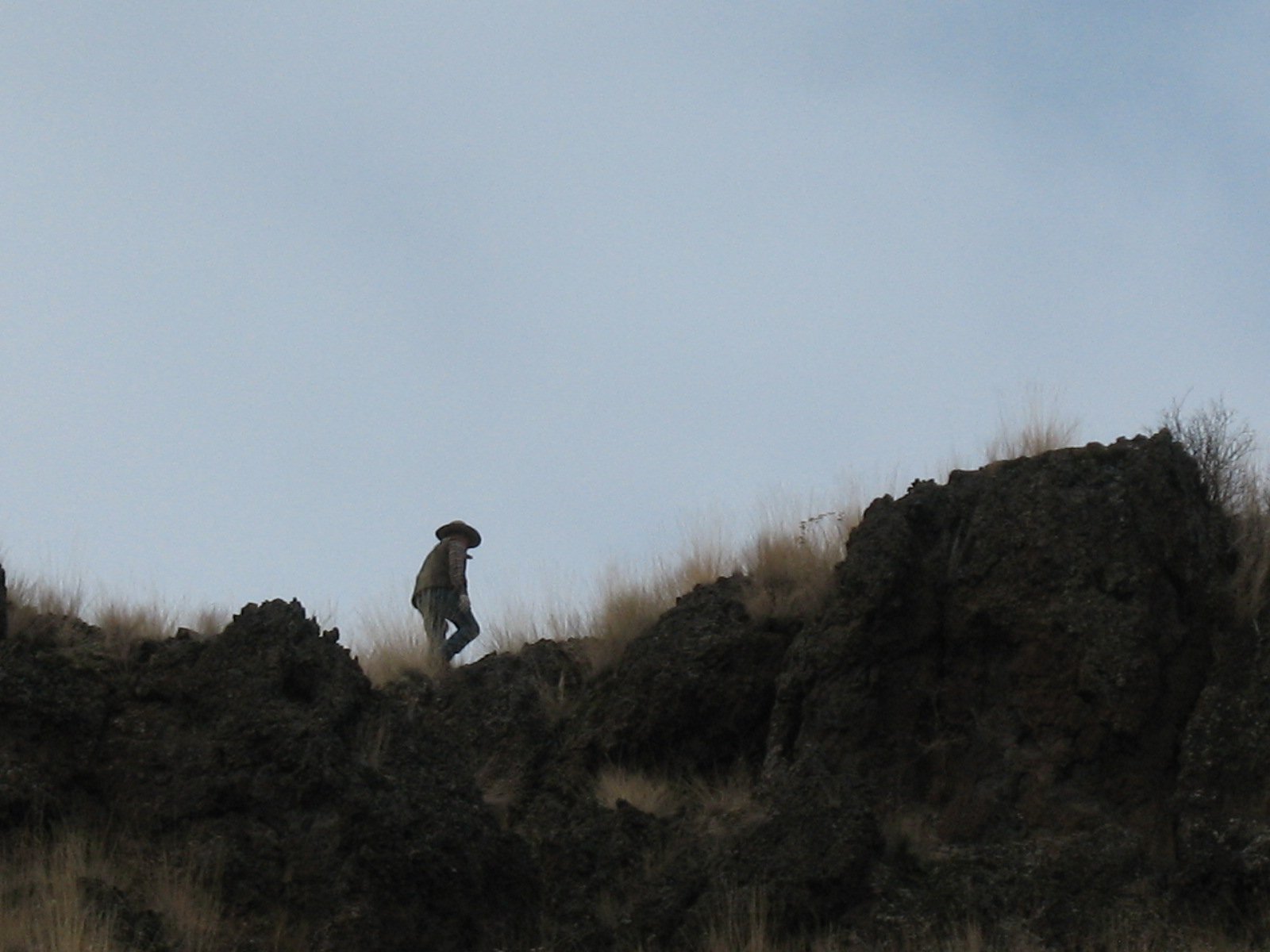
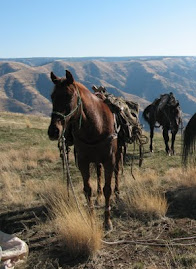
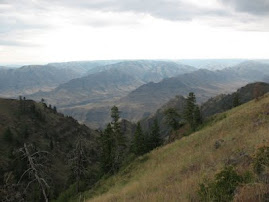
Late May storm in canyon


Since the pandemic, I've been sticking to my list when I go to town and not interacting with people much, so when a woman I know pulled up, I was delighted to find myself compelled to go talk to her. Our lives have intersected over the decades, not often, but in a variety of ways and across several generations. We are both ranchers working to keep our businesses going and we've collaborated to plan community food systems projects. We're both moms and grandmas. She's part of a fifth generation ranch and I'm part of a first generation one. We are alike and we are different. 

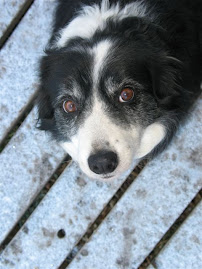
Maggie pup late May


A few years ago, after we had known each other a long time, we connected in a new way. She heard me read at Fireside, a winter program where the Fishtrap literary organization invites local writers to read for the community. Afterward she came up to me and said, "I didn't know that about you." Did she mean that I wrote poetry? That I was a herder?  Even living in a small place with not that many people, it is easy to make assumptions about who people are, what they believe or how they live their lives. 

Here is bit of the poem I read, which is about herding cattle:

Sometimes there's a jam, like when a branch catches in high water, 
and if you don't get it out right away, all the stuff coming down the crick piles up, wedged so tight you can't budge a thing.
But if you quick ease out that one willow slip, something else will shift and suddenly everything flows smooth again.
 
Or the way your horse moves kind of like a dog sometimes 
quietly threading the prairie behind the cattle
sometimes flanking, sometimes trailing 
sometimes heading, loping shoulder to shoulder with a heifer
 and turning together back toward the herd.
 
Or when you’re back-riding in a fall storm, three riders hunting thick timber for sign, listening for the bawl of cattle when they hear us coming through the brush.
Everything wet and getting wetter, thunder crashing so close and rain falling so hard you pull up and hunker three steaming horses wedged side by side under a stubby fir on the side of the draw, all of you knowing in a moment you’ll step back into the rain, hooting dribs and drabs of cattle out of their thickets, losing daylight and needing to go.  

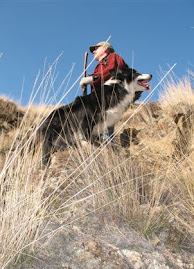
Sara gathering cattle in canyon


I wanted my friend to thank her daughter for reading a story at another Fireside event a few months back. It was the daughter's first time reading in public and because of the virus she had to read online in front of a computer screen, with no way of knowing who was in the audience watching and listening. She looked vulnerable and uncertain, but I could also sense the necessity she felt to share a part of her life. 

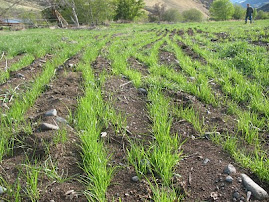
Lush river bar, late spring


In the story, she had been working on a remote ranch, calving out heifers during a severe winter. Night after night, she pushed off the weight of exhaustion and crawled out of bed every few hours to do what had to be done. On the night of the story, she slept through her alarm and woke up thinking of the heifer her boss warned might calve soon. Out in the swirling snowstorm, the beam of her headlamp caught first the wild eyes of the heifer and then below on the ground, the black mound of a dead calf. And all the voices of the naysayers in her life came rushing back, "You are too lazy and too selfish, and you will fail at ranching." 

Sara, Cammie and Abigail on day three trailing cows


But she didn't give up. Eventually she met her partner and is finding her own path toward raising a family, tending livestock, feeding community. As the story came to an end she told us how being woken in the night by the cries of her newborn what she sees first in her mind is not her son needing comfort, but that heifer's calf frozen to the ground. 

Gabe and Cammie turning out on the prairie


I was moved by this story and the honesty required to admit that we sometimes fail. We can't control the weather, but we have skills and resources and we try to use them as best we can to care for the cattle, horses, dogs and people we work with every day. It is good for us to remember that we all fall short sometimes. And by sharing the stories of our failures maybe we can learn from each other, not just how to do things or how not to do them, but how to listen, how to feel empathy and see the interconnectedness of life, the interdependence of all living beings on one another and our world. 

As drought and uncertainty unfold this summer, I'm sure I could use more of that kind of learning. 


Wishing for rain like this and not thunderstorms


From Sara at Magpie Ranch, home of Bunchgrass Beef


Thursday, September 24, 2020

It's Raining

I heard it from the kitchen this morning when I was up making coffee in the dark and I opened a window and stuck my hand out to be sure. A few months ago the sun would have been up hours ago. We have passed the equinox. Our days are shrinking while our nights grow longer. We feel it in our bones. 

Fall range, smoke approaching

Earlier this month the cows and calves made their last move on the prairie, from summer to fall pasture. I didn't even spend one day helping trail. I never even went one time all summer to see them. It makes me feel strange and disconnected from my world. I have spent most of my time since March indoors, in a virtual world, assisting hundreds of very small businesses to try to keep going, to pay their bills, to juggle their own versions of family, health, finances. This is the face of the pandemic in rural, where nearly half of people working have created a business to employ themselves. Like us, many have both businesses and jobs. It just happens that my job is helping businesses and nonprofits in a three county region. The hardest day so far was when a business owner on the other end of the phone told me I was kind. After she hung up, I cried. 

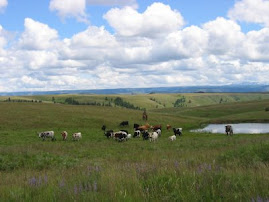
Summer pond

I'm going backwards in this story. Starting now in the time of harvest, of the ending of life for our beautiful steers. The flurry of communication, arranging a freezer trailer, mobile harvest services, the local meat processor, customers and invoicing. All leading to delivery day and the culmination of a year's work to raise healthy meat and feed people. I'm tired this morning. But I know in a few days I will see the faces of people who buy our steers, I will hear their lovely voices and their words of encouragement and appreciation. And they will help carry us forward so we can leave behind some of this uncertainty and toil with a renewed connection to others, people we rarely see and hardly know who remind us we are more alike than we are different. 


Black bull in reinforced corral

Summer had its challenges, in particular the renegade behavior of certain steers and bulls. We've not really had this problem before and I hope it will be a long time before we do again. It started in June in the canyon when one of our big steers decided he didn't want to wait in the corral for his trailer ride to summer pasture near the Wallowa Mountains. The corrals are tall, but that didn't stop him from trying and his weight made short order of the top two rails, creating a nice hole for all the other steers to follow. He did this twice. The second time after we made repairs, which were then followed with serious corral rebuilding (not on the schedule of course). Then it was the bulls out in the valley. They were so docile and manageable when we brought them home to await their trip to the cow herd out on the prairie. That was before they got wind of some neighbor's heifers a half mile away. Three escapes and three corral/fence repairs later, we were exhausted and they were contained and soon with their own cows on the summer range. All was well for about a month, until someone brought cattle onto the neighboring range and our bulls went awol. More wrangling and putting back in the right place ensued, until one day we got a call, "I roped your bull and have him in my trailer and I'll be at your house in twenty minutes." Black bull came home and was sold shortly thereafter. He had been busy. Whew, everyone behaved after that.

Cows and calves arrive on the prairie

Trailing out of the canyon in June went smoothly. It takes us three days on horseback. One cow calved the day before we started on the trail. She and her tiny calf made it up into the breaks, but then the calf petered out so we had to leave them behind in the timber. Two weeks later, she showed up in our herd after finding her way on her own. Good cow. 

Good help from neighbors and friends in May

Branding is a traditional gathering time where friends and neighbors pitch in to help. On big ranches that means lots of people, horses, kids, dogs, food and storytelling. On little ranches like ours, it's a smaller more intimate group, and this year with Covid-19, we kept it even smaller. It was kind of wierd, with changes like an outdoor handwashing station, not having people go in the house without a mask, no hugs or handshakes and distancing when possible. 

Handy for washing up

There were still plenty of fun and familiar moments. Like kids getting in on the action, and meeting new babies for the first time.


Little Kit with his dad Jordan 


Boys with ropes


We are so thankful to have help from this kind, loving, respectful, capable, and accepting group.  


Before branding, Mike and I spent a couple days in the canyon gathering cattle and getting everything ready. I cherish these times when it is just the two of us, riding together, mostly agreeing and sometimes disagreeing on how to get the job done. You never know exactly where the cattle will be, scattered in little groups in the rugged terrain. The days heat up quickly, it's hard to get them to move if the sun is too high. After wintering together, it's a mixed herd with cows and calves, yearlings, and two-year olds. The younger cattle are like teenagers, goofy, impulsive, and athletic, deciding to cavort off in the wrong direction. While the calves tire more easily and a few of the old cows will try to sneak off the trail and hide in a shady draw. 

Climbing up off the river bar

Sara trailing through Division Creek

So that's where we left spring behind and launched into a summer that brought us to autumn. What a lot of changes we've seen since then. At a time when the stress levels of people are high, and our emotional reserves are low, I'm thankful we can be with animals who live their lives at a slower pace. They experience their own challenges of daily life, finding their place within their social structures, navigating the terrain, staying vigilant of predators, finding resources of food and water during a time of climate change. But these challenges feel less complicated, and more manageable without the anxiety wrought by polarized and unhelpful media and politics. And I remember the voice of my old dear friend describing the effort and uncertainty of giving birth, "Ride the waves," she said. And I feel myself facing a wave, being lifted, and carried down the other side. 
Somewhere in the middle of change

From Sara at Magpie Ranch, home of Bunchgrass Beef

Monday, July 6, 2020

Zebulon Pike, RIP

He was, without a doubt, a keeper.  I'm not much for betting, but I bet it would be hard to find anybody who would disagree with that statement. Sound. Never had an accident. Steady. Strong. Sure footed. Good sense of self preservation. Pack him. Ride him, Rope a bull off him. Lead a pack string off him. Swim him. Slide down a hill on him. Jump a log on him. Chop trail though a hackberry thicket and lead him close behind and he'd keep himself out of the way of the machete.


Mike and Zeb, Dug Bar cattle drive 1999


He was born into the Brislawn herd of Spanish Mustangs on the short grass prairie near Oshoto, Wyoming.  He came to Oregon in the 1980s when a friend bought a load of young horses from the rancher who agreed to meet up in Dillon, Montana. Mike hauled a trailer over to get the horses and  picked out a line-backed zebra dun gelding as his payment and named him Zebulon Pike.  He was two years old and had only been handled a few times.

Always in his element in the canyons


Mike always said he only figured Zeb out because of Tom Dorrance and Tink Elordi. Mike had been working with Zeb for over a year, ground work, round pen, several colt clinics. But Zeb had a powerful sense of self preservation and he hadn't thought of a good reason why he should let Mike get on his back.  Finally Mike took Zeb to a training clinic in Malheur County with Tink, a younger basque trainer who was working with Tom, the venerable horseman from Wallowa County. A lot of trainers had advised Mike to 'desensitize' Zeb by exposing him over and over to the things he didn't like, sudden noises, clumsy movements. But after two days at the clinic, Zeb sulled up and wouldn't let anyone near him. Tom was watching from outside the pen and Tink asked for ideas. Tom told Mike to break it down to three steps, "Approach him like you're walking on kittens, grab some mane hair and get on." Mike 'walked on kittens,' got to Zeb's shoulder, took hold of some mane, put a toe in the stirrup and when he hesitated he heard Tom's quiet voice,"He's ready Mike. He's ready."
First ride, Mike and Zeb, ponied by Tink Elordi


It was the beginning of 30 years of partnership. Without the relationship Zeb had with Mike, none of the rest of us would have ever been able to enjoy knowing him. Over the decades, his mistrust changed to tolerance tinged with suspicion for most of us, but he always trusted Mike. Zeb was reluctant to be haltered, right up to the end, but as long as you showed commitment and quietness he'd let you catch him. Once caught he was always respectful.

Gabe and Zeb (age 19)


He might jump sideways at a tree cracking or spin to face a potential predator or slide a bit on a greasy north, but he'd stay upright and so would you, as long as you stayed on. If the terrain was challenging he'd take his time, little steps weaving down the steep slope or picking his way through deadfall. A smattering of cowboys, all of our kids, and - in his later years -  a slew of visitors and novices all enjoyed Zeb for his capable, sure-footed way of handling himself. 


Sara and Zeb (age 25) gathering cattle with Pete and Jon


I have so many stories with Zeb in them. The time at the Steen Place when an ornery angus bull butted Zeb and lifted him right off his feet with Mike on his back. And the day out on Alder Creek, when Mike and Zeb roped an injured bull in the brush and wrapped him around a big pine tree so we could doctor him. Or the winter we were coming down off Square mountain in a blizzard in Hells Canyon, me and my mare following Mike and Zeb as they broke trail through drifts up to Zeb's neck, and Mike warning me, "It'll feel like you can't touch bottom, but you will."


Zebulon Pike, 33 years old, April 2020


That's how it was with Zeb, you always knew you would touch bottom. Not many horses are as steady and capable as he was. Part of that was his self-preservation and part of that was based on the trust he had with Mike. They'd been through a lot and they worked it out together as they went a long. The day he died, Mike was by his side, keeping him company with a few gentle words to Zeb's occasional nicker, a patient companion as Zeb took the long trail for the last time.

Mike's illustration, cowboy poem, the Zebra Dun 


"The stranger sat there on him, and curled his black mustache, just like a summer boarder, a waitin' for his hash."

From Sara at Magpie Ranch, home of Bunchgrass Beef

Monday, February 17, 2020

Small Contentments

Wallowa Valley looking west


Sometimes the moon reminds us. Year after year, night after night, sailing across the sky or smothered by winter clouds, whether we see it or not, it's still up there easing along. And when we do see it, a small cheerfulness, a contentment is often the result. I don't know why.
Andrew gathers cattle to take to Pumpkin Creek


Perhaps I like to see the moon because it means a storm will only be wind and cold and not the snow or mud that burden our movements. No blizzard erasing what is ahead and leaving us without landmarks, feeling our way down through lurking cliffs with footing that gives way on steep norths. When this happens, I don't like to be alone. Caught in a fast-moving storm, barely able to see where my horse is about to take his next step, the breath and creak of another rider close behind comforts me.  

Can you see anything? 
When the trails are bad, I don't feel like going but I don't like being the one stuck back at the house either. Waiting for late riders to come in, when I don't how the work unfurled that day, whether the cattle were found and moved, whether the trail to the salt ground was passable. And I look up toward the bench, thinking of where they might be, right now, making their way down the face of the canyon. 
Trailing home from Pumpkin Creek


We are thankful not to have had bad trailing so far this winter. Coming and going to Pumpkin Creek were both pretty good. When it was time for the cows to come back to the river, Andrew gathered and brought them down the creek and up to the bench and handed them off to Mike and I.  A quick parlay by the hawthorn thicket, then Andrew headed back to Pumpkin Creek and Mike and I took the cows the rest of the way. It was an easy day. Nothing too muddy or half-frozen, no rain or snow, just clouds hovering along the ridgetops as a storm licked slowly toward us from the southwest. 

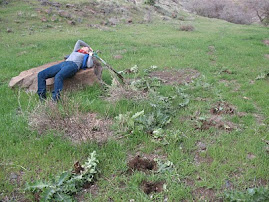
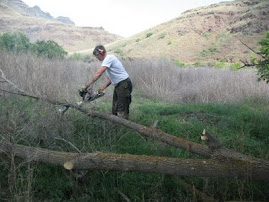
Mike's power nap after cutting out a fallen tree in the corrals
I'm happy to say some people have been doing better at taking it easy around here. One would be me. Mike would be another. This means that fencing and weed chopping and old feeder demolition are supposed to take place in shorter increments. 

Hooded and gloved for one more patch, just one more

The cockleburr invasion caused me to violate my oath. A heavy load of seed was carried onto the river bar by a flash flood last August and quickly germinated in the low spots. Now the vile injurious weed lured me and my hand scythe into one patch after another. Four hours later, even Mike was telling me to call it quits. I wanted to get the seed down on the ground before cattle or horses had to graze here. I hate the red and oozing ulcers sometimes caused by these sharp torpedo-shaped burrs burrowing against tender skin and I know how challenging it is to extricate them when they are tightly woven into an animal's hair (or my own braid for that matter).

Road work ala Sara and shovel


And then there are the jobs you don't anticipate. Like digging out the bank above the road up Pumpkin Creek where the same flash flood last summer cut too close to the track. A few feet of extra width made it a little safer until we can get equipment up there to do a better fix.


Pulling nails 

More satisfying is making progress on jobs that have been on the list for years. Replacing the old feeder down river on the east side is one of these jobs. Last year we rebuilt the fence along the old driveway and now we can rip out the old feeder, salvaging what material can be repurposed into new panels. Someday we might use this little pasture for weaning, instead of the temporary feeder that we have to put up and take down in the corrals every year. But first we will have to build a fence along the river and put in a water gap...jobs that will be on the list of winter work for a while yet I reckon. 

Especially since we are learning to 'take it easy.' Part of which is feeling time. Standing still once in a while to just take a look around. Maybe spotting the moon travelling by, headed west. 

Resting 

From Sara at Magpie Ranch, home of Bunchgrass Beef


Sunday, November 3, 2019

I Have Decided to Remember

When it is too early to be awake. When the sun has yet to rise and my mind has been telling me for a couple hours of all the things undone, the decisions unmade, the shortcomings and impossibilities. And my other mind has been quietly saying not really, so what, doesn't matter, because my body is still wanting rest, my cells saying replenish us, saying we will keep you alive to work another day but you have to give us time for ourselves.

Harvest


Sitting by the cookstove, having made a fire as quietly as possible, and reheated a cup of coffee, taking it out of the microwave when the timer says one second, before the jarring five-beeps of 'done' disturbs the other human in the house who is still asleep, I am studying.


In my left hand is the book I have been trying to finish before the second renewal on the interlibrary loan expires.  A deceptively small book of nearly 300 very dense pages in size 9 font. A book that turns out to be a kind of manna for a hunger that I am still discovering exists in me. A book I was advised to read by my colleague Janet, a risk-taker, daughter of immigrants, survivor of bad behaving bosses who were let off in spite of being called out under the 'protections' that claim to give us the right to labor in safety. Janet, a speaker-upper and sufferer of doubts, lover of human beings and desirer of change.  Of course I'm reading it.

From the garden


And plowing through the tall grass of learning inside this book, occasionally I reach a hawthorn thicket and lack the gumption to pick up a machete and hack my way forward. I make a few feeble attempts to push ahead and consider going back. Taking the easy way out. But by now, I've absorbed too much of this study, this learning that feels like a missing element introduced into my personal reactor, allowing neurons I never knew I had to start messaging each other, oblivious to my intention.

Wes, Abby, Punch (grown up) in the barn


This book of strategy, of magic, of agency, of future. It simultaneously evokes relief and dismay, possibility and doubt. It calls forth the manifestation of the high school teacher, weirdly savant, who expected us to imagine social engineering through the lens of science fiction written by extraterrestrials. Which made perfect sense to me, when everyone else thought he was crazy.

Gate to mailbox


It calls forth the bizarre contrasts of a life with both the self-choosing of hermitage and manual labor on the ranch and the dogged commitment to a job in a hierarchy where a superior reminds me, Don't forget, I get to decide what you do with your brain. 

And so this book, this infectious changeling breaking out of its birth-shell to replicate in vulnerable hosts like me, leads me to a decision.
Wes caught a frog in the marsh


I have decided to remember.  I have decided to listen to the people who arrive inside this ecomap of self where I am experimenting with making sense. For whatever reason they choose to be here. For whatever reason, as yet unknown to me, that has brought them here.

Punch (Opuntia - Prickly Pear) as a puppy


And this morning, as the sky turns from black to matte blue in the west and to streaky grey-blue on the horizon of the Seven Devils in the east, I remember Yesenia. Because she is here in the kitchen with me. Right now.


And I wonder why. And I think of her fierceness, her quiet apologetic confession when her heart is not right and she needs to lie down for a moment, her casual declarations of intention in business, her crossing the blood barrier of culture and language and family and success.  And I think of her among the agave plants and the cricket protein and the fruity paletas of entrepreneurial exploration, bouncing back and forth among the powerful monied and the powerful poor. And I think of the invitation of fiesta, that I could not partake in but longed to, Dia de los Muertos, at her tiny house in its bigger yard that I have never been to in Southeast Portland, an invitation to be with family, to speak and love in the sounds of other languages of us, the people of earth.

Altar -- Dia de los Difuntos


So in spite of nearly a year since I last thought of Yesenia, this person I know very little about, I text her to thank her for visiting me in the predawn in the kitchen where I am sitting next to the ticking fire of the cookstove, with the sound of the wind flowing across the fields outside, and I tell her mi mama fallecio el fin de Junio. I tell her how the day my mother died was a day of love and friendship and humor. How astounded I was at the gift my mother gave me of being able to wash her corpse and the revelation of beauty and strength cultivated over 94 years that allowed her to achieve her life-long desire to donate herself to students of medicine as an aged female with no disqualifying conditions, because her own life was transformed by the gift of education when she was young and poor and studying the bodies of others who had given themselves to be dissected, to be revealed in their glorious intricacy and variation.

Con mi Mama


I have decided to remember there is a reason people come up behind me and are tapping at my senses. They are speaking and I'm going to listen.


From Sara at Magpie Ranch, home of Bunchgrass Beef.


Fairy Godmother of Systems Change


Saturday, September 21, 2019

Without a Word

One of the things I love is the quiet, calm, wordless world of handling our beautiful cattle. I experience this sometimes poking along with a bunch of cows strung out along a trail, taking their time as they slowly make their way from one part of the range to another. A munch here, a munch there, a swish of tail, a swing of a cow's long-horned head looking back to make sure her calf is still just a few animals behind and then moving on through the brush, across a creek, or side-hilling a slope beneath stair-stepped rims.


Our lives became more complicated when Mike took on the grazing management of 30,000 acres of Zumwalt Prairie Preserve a few years ago.  I've learned a lot watching him consider the intersection of millennia of past tradition and mere decades of modern demands in this landscape.
Mike on the Zumwalt

As a herder and a pastoralist for nearly all of his adult life, the care and tending of animals is in his blood. As a rangeland ecologist, he is deeply attentive to the relationships between plants, animals and their environment. And perhaps most importantly, he approaches this blending of culture and science as a precious and imperfect unfolding, the way-finding of story. What do we know? What do we see? What are we telling each other? Are we listening?


Going forward with the ranch sometimes feels like tiptoeing across a bog. You have to keep moving or you will sink into the muck, so you pick a set of hummocks and you go for it. Guessing how much force you need to leap from one mound to the next, trying to land as delicately as you can in case your perch proves too soft and you need to keep going, getting just enough purchase to launch again. A wobbly hopscotch through an unknown mire where you can see the solid ground you're aiming for on the other side. But who knows, will it really be as solid as you think?


As we juggle five or more grazing leases of our own every year, we must consider each property's needs and provisions; its owners, fences, waters, forages and logistics. Some with cabins and barns and corrals and water systems and roads to maintain. Some with nothing but a weak fence and difficult neighbors.

Trailing to fall pasture on the prairie


I'm challenged to communicate how much it means to have quiet help in this work. Just the other day as Mike, Dave and I gathered and sorted some of our beautiful two-year old steers for harvesting, the fellowship of good help washed over me in a moment of joy and wonder. Every part, from bringing the steers off the hillside and through the gate onto the road, turning them into the corrals, sorting them on horseback and on foot, loading them into the trailers, was done quietly with a firm and gentle nature.

Dave builds a loop at branding time


We were aware of the alternatives. We've all been part of loud, frantic scenes of barking dogs, yelling people, roaring four-wheelers, bellering cattle, charging horses. Ramming and jamming. Dogging 'em. Git 'er done.

If heaven is a transcendent intersection between the terrestrial world and the unknown, with the possibility of rebirth at the cusp of uncertainty and danger, it includes quiet moments of grace like these. A few souls, gathered together, doing as best they can for one another, reconciling life and death, being willing to change and knowing circumstances might not be this way tomorrow or next year or a million years from now.


And what can I say to Dave? Stepping up to help us as a day-rider, when once again his peaceful and competent approach aligns with ours like the rivulets of a stream joining together to flow gently over an obstacle in their path, and quietly carrying on. Just carrying on.


Andi tallies


Mostly I just say, "Thanks Dave." And he nods and we go on with our work. But as time goes on I'm realizing that the beauty of this effort needs to be acknowledged with more words. And I try to remember each time we receive help in this way; whether it's one person or a group of people; whether gathering, trailing, branding or hauling; I try to remember to say what I mean, "Thank you for helping us. Thank you for being safe and for treating the animals with respect and care."


From Sara at Magpie Ranch, Home of Bunchgrass Beef