Tuesday, September 28, 2021

Way Over Yonder in a Minor Key

We just passed the autumnal equinox. The first day of fall arrives in a buttery flat light spread over dry fields and ridges to the north. Wisps of sweet clouds lose their pinkness by the minute, turn grey then white as the sun rises out of the east like a laser cutting a flaming horizon from dark timber, then headlong brightening the valley, planting kisses here and there among the hills.


First snow, irrigated fields still green


Where is my love in this quiet moment before the day unfolds in the rumble of grain trucks, the rattle of stock trailers, the bawling of the neighbor's cattle at weaning time? He is slumbering under covers made heavier and warmer now that nights are longer and freeze more often than not. For sleep, I am thankful.


Here she comes, harvest moon


We have to move our cows and calves off the prairie early this year. It is no surprise, but we were holding out hope that we might be able to make it to early November, like we usually do. I’m trying not to think about it too much, or ask too many questions. We have options. I’m letting my pardner figure them out.


Sibling spin - grandkids


After the month-long beef harvest with deliveries and communications, we try to rest more and do less for a while. The customers are kind and thoughtful and varied and they jump into the dance of harvest, reassuring us they will be there at the ready on delivery day, meeting us with words of thanks and encouragement, taking interest and sharing stories from their lives. And I am thankful for safe travels; for our adult children unloading heavy boxes, taking payments and keeping track, and arranging a delicious dinner of Thai take-out. 


Thank you carriers of heavy boxes


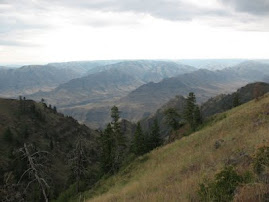
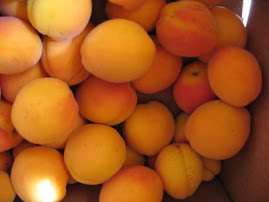
We try to do less and rest more. We imagine a lull in the ever-long list of tasks and projects and before the hay hauling and the cattle trailing begin, we go to the canyon to see if the bears and deer and turkeys have left us any pears. We get a late start and drive down in the dusk through an eerie landscape of parched rangeland. The first real rain in four months has fallen just a few days ago, but you can't even tell, and I feet a familiar weight on my chest and a familiar pit in my stomach.


Storm clouds, hope they bring rain


We unload in the dark and we check the spring – a trickle still fills the cistern. We make a fire in the woodstove and we go out in the night and sit silently for a while on the edge of the porch, watching strange dimpled clouds arriving out of the east. 


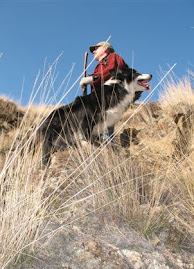
Dog tamer


We walk out into the orchard to look at the trees. The full moon has yet to crest the eastern rim, but in the dark lee of the river bottom we can still make out our faint shadows on the ground. We turn around and stare at high western rims already bathed in a near-daylight that edges towards us, casting draws and benches in stark relief. 


Little farm house in the valley -  home place


As I look up at the towering rocks, for a moment I feel cradled inside a circle of strong brothers. But a tumult of emotion overtakes me, first like salt water knocking me down and dragging me across a rocky beach, and then the river gripping me in a frothy rapid and spitting me out into a gentle curling eddy.  For not feeling estranged from beauty, I am thankful.  


Sedona and Chester


And we stand there under the trees, apart from each other, quietly gazing on everything around us. Finally, we talk to one another, and he tells me things I never heard before. And I listen, and my love listens back, and I am thankful.  


Woody Guthrie Poem, excerpt      


From Sara at Magpie Ranch, home of Bunchgrass Beef

Dirty faces - Sara and Abby


Friday, August 27, 2021

Winnowing


This morning just before dawn, when I woke up and could feel cold seeping into the old farmhouse, I thought of the garden, ripening and vulnerable. The cucumbers and beans are coming on strong, but the winter squash has a long ways to go. An overnight forecast of 41 degrees in Joseph could easily be 31 degrees here where the air currents flow down-valley along the creek.


Yearlings mid June


The last two nights I covered the garden with huge tarps and it had frosted hard. But I didn’t want to go out in the dark and cold last night, and now my conscience was nagging me. I went to the kitchen and looked at the outdoor thermometer, 36 degrees. Whew. This cold snap would not be the one to put an end to the warm weather crops. There was still hope of a few winter squashes to squirrel away for the months ahead.  


First cuke harvest


I have not gleaned or put-up as much food this year as I usually do. The drought and other challenges have put extra demands on our bodies and our waking hours outside our day-jobs of community development and rangeland management. Dealing with dwindling irrigation water, early moves to pastures, fences needing many repairs, hustling to get catch pens up in pastures without
corrals or reinforcing old corrals.


New full crib 


We are aware that others are facing much more stressful choices like hauling stock water to cattle when range ponds dry up, having to sell mother cows because they have run out of feed, or desperately organizing evacuation of animals under threat of wildfire. We are thankful.


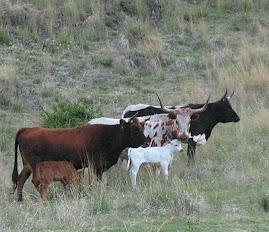
 Cows and calves, August pasture move earlier than usual


This morning, even though there is no wind, I find myself thinking of winnowing. The act of separation, the ways we choose what to keep and what to discard, what is desirable and what is unwanted.


August bouquet


In June my friend Beth passed away and I wanted to make something special and delicious for her memorial. She was a skilled farmer and used her organic produce and other locally-sourced food in her catering business, with beautiful and yummy results. 


Honey curry pickles


Beth was also my partner in last minute trips to pick fruit in wild places. We borrowed each other’s ice cream freezers when we needed to make multiple gallons of ice cream to feed large gatherings. We schemed and planned community food system projects, like starting a farmers market and a local food directory, or a grow-a-row for the food pantry campaign.  


Maggie one year old, 'I'll herd em! Cats, cows, horses!' 


When I decided to  make beef cheeks for the potluck, I did something I rarely do, I followed a recipe and I cooked with wine. After a 90 degree day, I stayed up so I could use the oven at night, braising the beef cheeks on a bed of vegetables for three hours, then putting the pot in a bath of cold water to so I could go to bed.


Bunkhouse, August morning Wallowa Valley


The next day, I saw the recipe said to remove the meat and put the vegetables and braising liquid through a sieve. I have a sieve, but I've hardly ever used it and I almost skipped this step. What difference would it make? But I went ahead and fished out the chunks of meat and heated up the gelatinous stock to make it pourable.


Sedona, Zumwalt Prairie


Back and forth, back and forth, I pressed the wooden spoon against the mesh until nothing more seemed to go through. Not much was left in the sieve and it looked totally edible to me. I was tempted to scrape it into the pot, but I didn’t. 


Back porch


The recipe then said to slice the beef cheeks and put them back into the sieved liquid and reheat. I’ve never done that before either. I’ve just cooked them until done and served them. But I did it, hurrying to get it all really hot before packing the big pot in towels in a box and rushing off to the potluck.


Squash, cuke, bean patch, not yet frosted! 


As I placed the pot on the table, I was given a little card to label my dish, “Beef cheeks braised in red wine, Magpie Ranch.” I thought a lot of people might avoid eating a beef cheek, something they had never probably never heard of or tasted before.


New hollyhock, from seed collected in an alley


I was a bit overwhelmed by the gathering, even though it was outdoors and everyone was well spread out under the pine trees beneath the shadow of Mount Joseph. I lingered on the edges, thinking of Beth and feeling her loss, but after the eating began, people started coming up to me. “Somebody told me you made that dish, those beef cheeks. Those are incredible!” I said thank you, and figured I better go try some myself. They were different from any other meat I've had. Hot, savory, and satiny, they literally melted in my mouth.


Transparent apples, early to ripen, good for sauce


I don’t really know what this means, but since the potluck I’ve used my sieve a few more times, discarding parts of what I’m canning, blackberry seeds, plum skins. And each time I’ve felt an oddness about this winnowing, this choice to discard something that could be eaten, that is probably good for you. And it makes me think of other kinds of winnowing, of the labels we put on people, sorting them into keepers and culls, and of who does the deciding and how and why. Which farmers or ranchers qualify for drought relief funds? Which small businesses should get financial support? Which changes should we seek in the world? Who deserves water, a home, nutritious food, a ventilator, love?


Customer love helps keep us going


And I know I’m sometimes like the wind, sifting through the days and moments of my life, choosing, sometimes recklessly, what is precious and what is undeserving of further thought.


From Sara at Magpie Ranch, home of Bunchgrass Beef


Monday, July 5, 2021

Honest Failure 

The other day, I was in town to switch out my winter tires and while waiting I dragged a chair outside the tire shop to eat my lunch and read. During the hour and half I was sitting there near the front door, I noticed how exposed I felt as other customers came and went. At the same time I noticed part of me really wanted to see people and be out in the open.


Late May storm in canyon


Since the pandemic, I've been sticking to my list when I go to town and not interacting with people much, so when a woman I know pulled up, I was delighted to find myself compelled to go talk to her. Our lives have intersected over the decades, not often, but in a variety of ways and across several generations. We are both ranchers working to keep our businesses going and we've collaborated to plan community food systems projects. We're both moms and grandmas. She's part of a fifth generation ranch and I'm part of a first generation one. We are alike and we are different. 

Maggie pup late May


A few years ago, after we had known each other a long time, we connected in a new way. She heard me read at Fireside, a winter program where the Fishtrap literary organization invites local writers to read for the community. Afterward she came up to me and said, "I didn't know that about you." Did she mean that I wrote poetry? That I was a herder?  Even living in a small place with not that many people, it is easy to make assumptions about who people are, what they believe or how they live their lives. 

Here is bit of the poem I read, which is about herding cattle:

Sometimes there's a jam, like when a branch catches in high water, 
and if you don't get it out right away, all the stuff coming down the crick piles up, wedged so tight you can't budge a thing.
But if you quick ease out that one willow slip, something else will shift and suddenly everything flows smooth again.
 
Or the way your horse moves kind of like a dog sometimes 
quietly threading the prairie behind the cattle
sometimes flanking, sometimes trailing 
sometimes heading, loping shoulder to shoulder with a heifer
 and turning together back toward the herd.
 
Or when you’re back-riding in a fall storm, three riders hunting thick timber for sign, listening for the bawl of cattle when they hear us coming through the brush.
Everything wet and getting wetter, thunder crashing so close and rain falling so hard you pull up and hunker three steaming horses wedged side by side under a stubby fir on the side of the draw, all of you knowing in a moment you’ll step back into the rain, hooting dribs and drabs of cattle out of their thickets, losing daylight and needing to go.  

Sara gathering cattle in canyon


I wanted my friend to thank her daughter for reading a story at another Fireside event a few months back. It was the daughter's first time reading in public and because of the virus she had to read online in front of a computer screen, with no way of knowing who was in the audience watching and listening. She looked vulnerable and uncertain, but I could also sense the necessity she felt to share a part of her life. 

Lush river bar, late spring


In the story, she had been working on a remote ranch, calving out heifers during a severe winter. Night after night, she pushed off the weight of exhaustion and crawled out of bed every few hours to do what had to be done. On the night of the story, she slept through her alarm and woke up thinking of the heifer her boss warned might calve soon. Out in the swirling snowstorm, the beam of her headlamp caught first the wild eyes of the heifer and then below on the ground, the black mound of a dead calf. And all the voices of the naysayers in her life came rushing back, "You are too lazy and too selfish, and you will fail at ranching." 

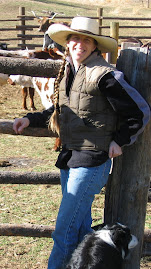
Sara, Cammie and Abigail on day three trailing cows


But she didn't give up. Eventually she met her partner and is finding her own path toward raising a family, tending livestock, feeding community. As the story came to an end she told us how being woken in the night by the cries of her newborn what she sees first in her mind is not her son needing comfort, but that heifer's calf frozen to the ground. 

Gabe and Cammie turning out on the prairie


I was moved by this story and the honesty required to admit that we sometimes fail. We can't control the weather, but we have skills and resources and we try to use them as best we can to care for the cattle, horses, dogs and people we work with every day. It is good for us to remember that we all fall short sometimes. And by sharing the stories of our failures maybe we can learn from each other, not just how to do things or how not to do them, but how to listen, how to feel empathy and see the interconnectedness of life, the interdependence of all living beings on one another and our world. 

As drought and uncertainty unfold this summer, I'm sure I could use more of that kind of learning. 


Wishing for rain like this and not thunderstorms


From Sara at Magpie Ranch, home of Bunchgrass Beef


Thursday, September 24, 2020

It's Raining

I heard it from the kitchen this morning when I was up making coffee in the dark and I opened a window and stuck my hand out to be sure. A few months ago the sun would have been up hours ago. We have passed the equinox. Our days are shrinking while our nights grow longer. We feel it in our bones. 

Fall range, smoke approaching

Earlier this month the cows and calves made their last move on the prairie, from summer to fall pasture. I didn't even spend one day helping trail. I never even went one time all summer to see them. It makes me feel strange and disconnected from my world. I have spent most of my time since March indoors, in a virtual world, assisting hundreds of very small businesses to try to keep going, to pay their bills, to juggle their own versions of family, health, finances. This is the face of the pandemic in rural, where nearly half of people working have created a business to employ themselves. Like us, many have both businesses and jobs. It just happens that my job is helping businesses and nonprofits in a three county region. The hardest day so far was when a business owner on the other end of the phone told me I was kind. After she hung up, I cried. 

Summer pond

I'm going backwards in this story. Starting now in the time of harvest, of the ending of life for our beautiful steers. The flurry of communication, arranging a freezer trailer, mobile harvest services, the local meat processor, customers and invoicing. All leading to delivery day and the culmination of a year's work to raise healthy meat and feed people. I'm tired this morning. But I know in a few days I will see the faces of people who buy our steers, I will hear their lovely voices and their words of encouragement and appreciation. And they will help carry us forward so we can leave behind some of this uncertainty and toil with a renewed connection to others, people we rarely see and hardly know who remind us we are more alike than we are different. 


Black bull in reinforced corral

Summer had its challenges, in particular the renegade behavior of certain steers and bulls. We've not really had this problem before and I hope it will be a long time before we do again. It started in June in the canyon when one of our big steers decided he didn't want to wait in the corral for his trailer ride to summer pasture near the Wallowa Mountains. The corrals are tall, but that didn't stop him from trying and his weight made short order of the top two rails, creating a nice hole for all the other steers to follow. He did this twice. The second time after we made repairs, which were then followed with serious corral rebuilding (not on the schedule of course). Then it was the bulls out in the valley. They were so docile and manageable when we brought them home to await their trip to the cow herd out on the prairie. That was before they got wind of some neighbor's heifers a half mile away. Three escapes and three corral/fence repairs later, we were exhausted and they were contained and soon with their own cows on the summer range. All was well for about a month, until someone brought cattle onto the neighboring range and our bulls went awol. More wrangling and putting back in the right place ensued, until one day we got a call, "I roped your bull and have him in my trailer and I'll be at your house in twenty minutes." Black bull came home and was sold shortly thereafter. He had been busy. Whew, everyone behaved after that.

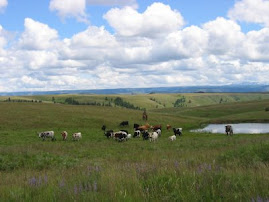
Cows and calves arrive on the prairie

Trailing out of the canyon in June went smoothly. It takes us three days on horseback. One cow calved the day before we started on the trail. She and her tiny calf made it up into the breaks, but then the calf petered out so we had to leave them behind in the timber. Two weeks later, she showed up in our herd after finding her way on her own. Good cow. 

Good help from neighbors and friends in May

Branding is a traditional gathering time where friends and neighbors pitch in to help. On big ranches that means lots of people, horses, kids, dogs, food and storytelling. On little ranches like ours, it's a smaller more intimate group, and this year with Covid-19, we kept it even smaller. It was kind of wierd, with changes like an outdoor handwashing station, not having people go in the house without a mask, no hugs or handshakes and distancing when possible. 

Handy for washing up

There were still plenty of fun and familiar moments. Like kids getting in on the action, and meeting new babies for the first time.


Little Kit with his dad Jordan 


Boys with ropes


We are so thankful to have help from this kind, loving, respectful, capable, and accepting group.  


Before branding, Mike and I spent a couple days in the canyon gathering cattle and getting everything ready. I cherish these times when it is just the two of us, riding together, mostly agreeing and sometimes disagreeing on how to get the job done. You never know exactly where the cattle will be, scattered in little groups in the rugged terrain. The days heat up quickly, it's hard to get them to move if the sun is too high. After wintering together, it's a mixed herd with cows and calves, yearlings, and two-year olds. The younger cattle are like teenagers, goofy, impulsive, and athletic, deciding to cavort off in the wrong direction. While the calves tire more easily and a few of the old cows will try to sneak off the trail and hide in a shady draw. 

Climbing up off the river bar

Sara trailing through Division Creek

So that's where we left spring behind and launched into a summer that brought us to autumn. What a lot of changes we've seen since then. At a time when the stress levels of people are high, and our emotional reserves are low, I'm thankful we can be with animals who live their lives at a slower pace. They experience their own challenges of daily life, finding their place within their social structures, navigating the terrain, staying vigilant of predators, finding resources of food and water during a time of climate change. But these challenges feel less complicated, and more manageable without the anxiety wrought by polarized and unhelpful media and politics. And I remember the voice of my old dear friend describing the effort and uncertainty of giving birth, "Ride the waves," she said. And I feel myself facing a wave, being lifted, and carried down the other side. 
Somewhere in the middle of change

From Sara at Magpie Ranch, home of Bunchgrass Beef

Monday, July 6, 2020

Zebulon Pike, RIP

He was, without a doubt, a keeper.  I'm not much for betting, but I bet it would be hard to find anybody who would disagree with that statement. Sound. Never had an accident. Steady. Strong. Sure footed. Good sense of self preservation. Pack him. Ride him, Rope a bull off him. Lead a pack string off him. Swim him. Slide down a hill on him. Jump a log on him. Chop trail though a hackberry thicket and lead him close behind and he'd keep himself out of the way of the machete.


Mike and Zeb, Dug Bar cattle drive 1999


He was born into the Brislawn herd of Spanish Mustangs on the short grass prairie near Oshoto, Wyoming.  He came to Oregon in the 1980s when a friend bought a load of young horses from the rancher who agreed to meet up in Dillon, Montana. Mike hauled a trailer over to get the horses and  picked out a line-backed zebra dun gelding as his payment and named him Zebulon Pike.  He was two years old and had only been handled a few times.

Always in his element in the canyons


Mike always said he only figured Zeb out because of Tom Dorrance and Tink Elordi. Mike had been working with Zeb for over a year, ground work, round pen, several colt clinics. But Zeb had a powerful sense of self preservation and he hadn't thought of a good reason why he should let Mike get on his back.  Finally Mike took Zeb to a training clinic in Malheur County with Tink, a younger basque trainer who was working with Tom, the venerable horseman from Wallowa County. A lot of trainers had advised Mike to 'desensitize' Zeb by exposing him over and over to the things he didn't like, sudden noises, clumsy movements. But after two days at the clinic, Zeb sulled up and wouldn't let anyone near him. Tom was watching from outside the pen and Tink asked for ideas. Tom told Mike to break it down to three steps, "Approach him like you're walking on kittens, grab some mane hair and get on." Mike 'walked on kittens,' got to Zeb's shoulder, took hold of some mane, put a toe in the stirrup and when he hesitated he heard Tom's quiet voice,"He's ready Mike. He's ready."
First ride, Mike and Zeb, ponied by Tink Elordi


It was the beginning of 30 years of partnership. Without the relationship Zeb had with Mike, none of the rest of us would have ever been able to enjoy knowing him. Over the decades, his mistrust changed to tolerance tinged with suspicion for most of us, but he always trusted Mike. Zeb was reluctant to be haltered, right up to the end, but as long as you showed commitment and quietness he'd let you catch him. Once caught he was always respectful.

Gabe and Zeb (age 19)


He might jump sideways at a tree cracking or spin to face a potential predator or slide a bit on a greasy north, but he'd stay upright and so would you, as long as you stayed on. If the terrain was challenging he'd take his time, little steps weaving down the steep slope or picking his way through deadfall. A smattering of cowboys, all of our kids, and - in his later years -  a slew of visitors and novices all enjoyed Zeb for his capable, sure-footed way of handling himself. 


Sara and Zeb (age 25) gathering cattle with Pete and Jon


I have so many stories with Zeb in them. The time at the Steen Place when an ornery angus bull butted Zeb and lifted him right off his feet with Mike on his back. And the day out on Alder Creek, when Mike and Zeb roped an injured bull in the brush and wrapped him around a big pine tree so we could doctor him. Or the winter we were coming down off Square mountain in a blizzard in Hells Canyon, me and my mare following Mike and Zeb as they broke trail through drifts up to Zeb's neck, and Mike warning me, "It'll feel like you can't touch bottom, but you will."


Zebulon Pike, 33 years old, April 2020


That's how it was with Zeb, you always knew you would touch bottom. Not many horses are as steady and capable as he was. Part of that was his self-preservation and part of that was based on the trust he had with Mike. They'd been through a lot and they worked it out together as they went a long. The day he died, Mike was by his side, keeping him company with a few gentle words to Zeb's occasional nicker, a patient companion as Zeb took the long trail for the last time.

Mike's illustration, cowboy poem, the Zebra Dun 


"The stranger sat there on him, and curled his black mustache, just like a summer boarder, a waitin' for his hash."

From Sara at Magpie Ranch, home of Bunchgrass Beef